Heat pumps: all information at a look
Heat pump guide
Has your old oil or gas heating system reached the end of its service life, or are you planning a new build? Is a heat pump the right choice for your home? Find all the answers about how heat pumps work and their costs in our guide.
What Is a Heat Pump?
A heat pump uses energy from the environment to heat buildings and provide domestic hot water. Instead of burning fossil fuels, it extracts heat from the air, ground, or groundwater and raises its temperature through a refrigeration cycle. In practice, 1 kWh of electricity can generate approximately 3 to 5 kWh of heat energy. Modern systems therefore achieve efficiencies of 300% to 500%.
Most of the heat produced comes directly from renewable environmental sources, making heat pumps one of the most energy-efficient and climate-friendly heating technologies available. When powered by renewable electricity, such as from a photovoltaic system or green electricity from the grid, a heat pump can operate with virtually net-zero CO₂ emissions.
For more than 50 years, we at STIEBEL ELTRON have been developing and manufacturing heat pumps. What does that mean for you? It means that for more than five decades, we have been improving our products every single day. We collect operating data from our heat pumps, analyze it, and continuously expand our knowledge base with new insights and experience.
Everything starts on the computer with the creation of a CAD model of the heat pump, which serves as the basis for extensive simulation calculations. In our laboratories in Holzminden, we refine and optimize every aspect of the product step by step, with one goal in mind: building the best heat pump we possibly can.
Before a new heat pump series reaches the market, it must prove itself in extensive field testing. Only when it has demonstrated that it is robust, safe, reliable, durable, and highly efficient does it earn the right to move into your home.
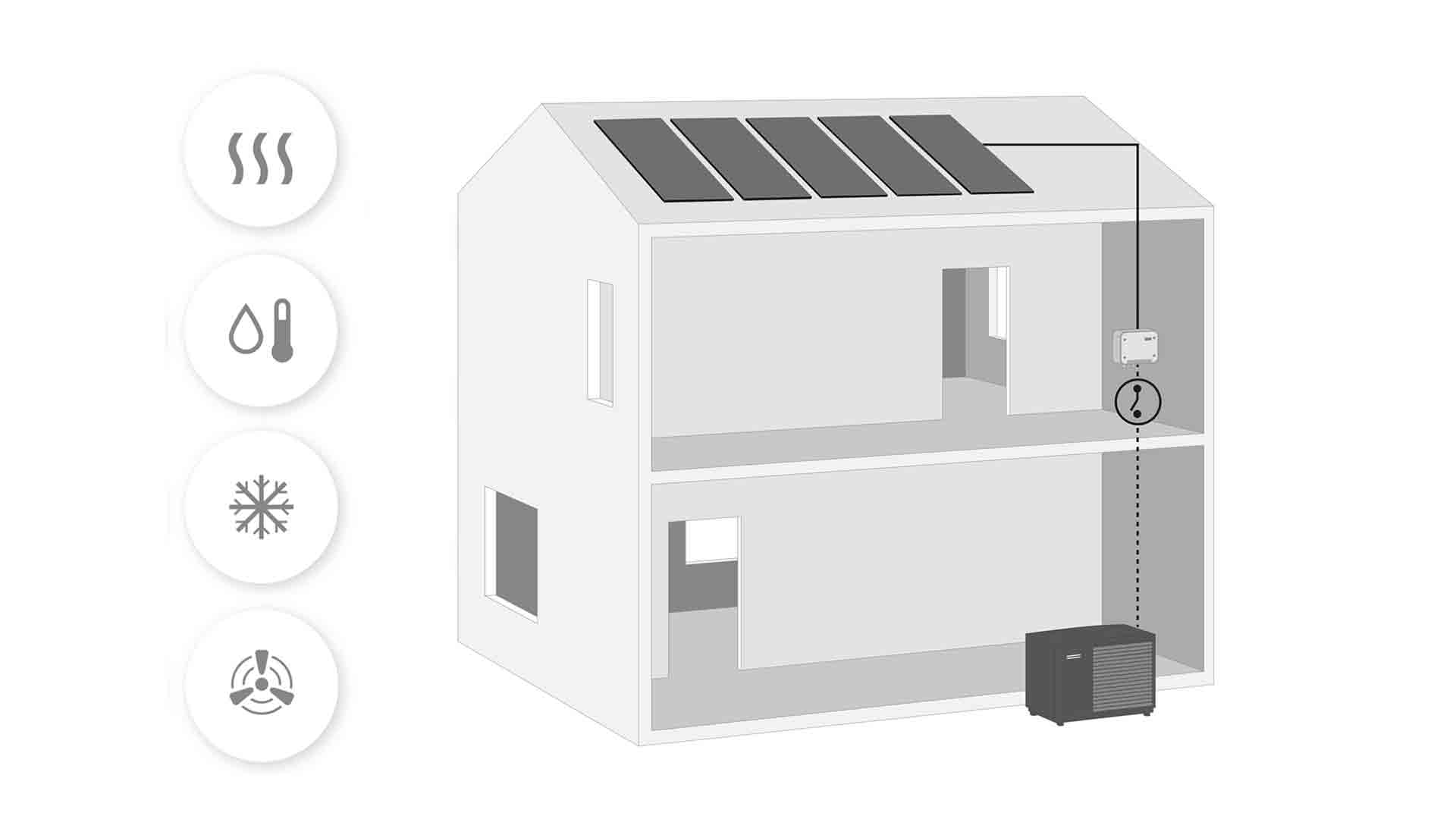
Modern STIEBEL ELTRON heat pumps are true multi-talents. In addition to providing highly efficient heating, many models offer a range of additional functions:
- Cooling:
Many of our heat pump models can heat your home in winter and provide cooling in summer through underfloor heating systems. - Domestic Hot Water:
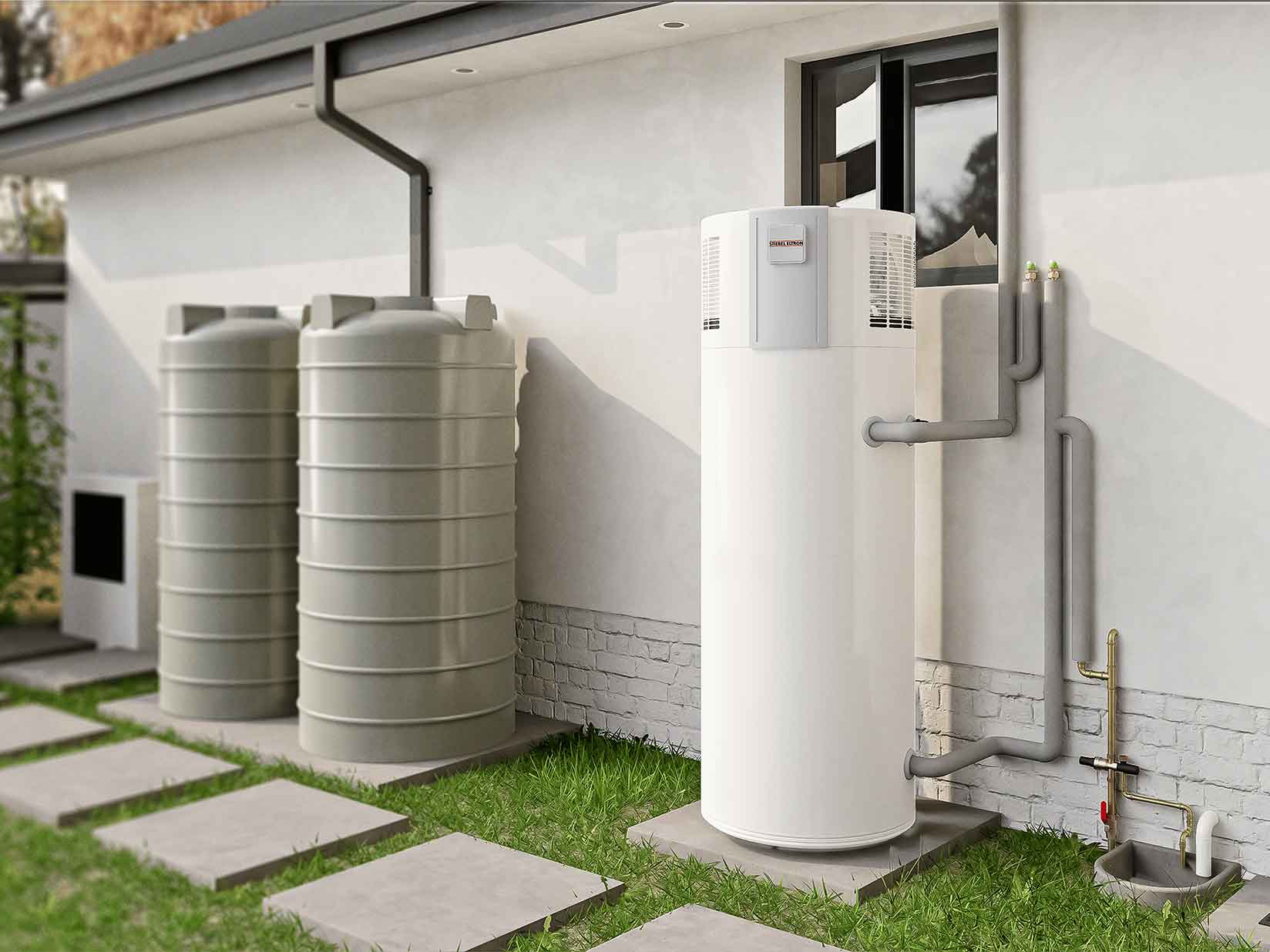
Air-to-water, ground-source (brine-to-water), and water-to-water heat pumps can reliably supply both your heating system and your kitchen and bathroom with hot water. Domestic hot water heat pumps, on the other hand, are designed exclusively for water heating.
How does a heat pump work?
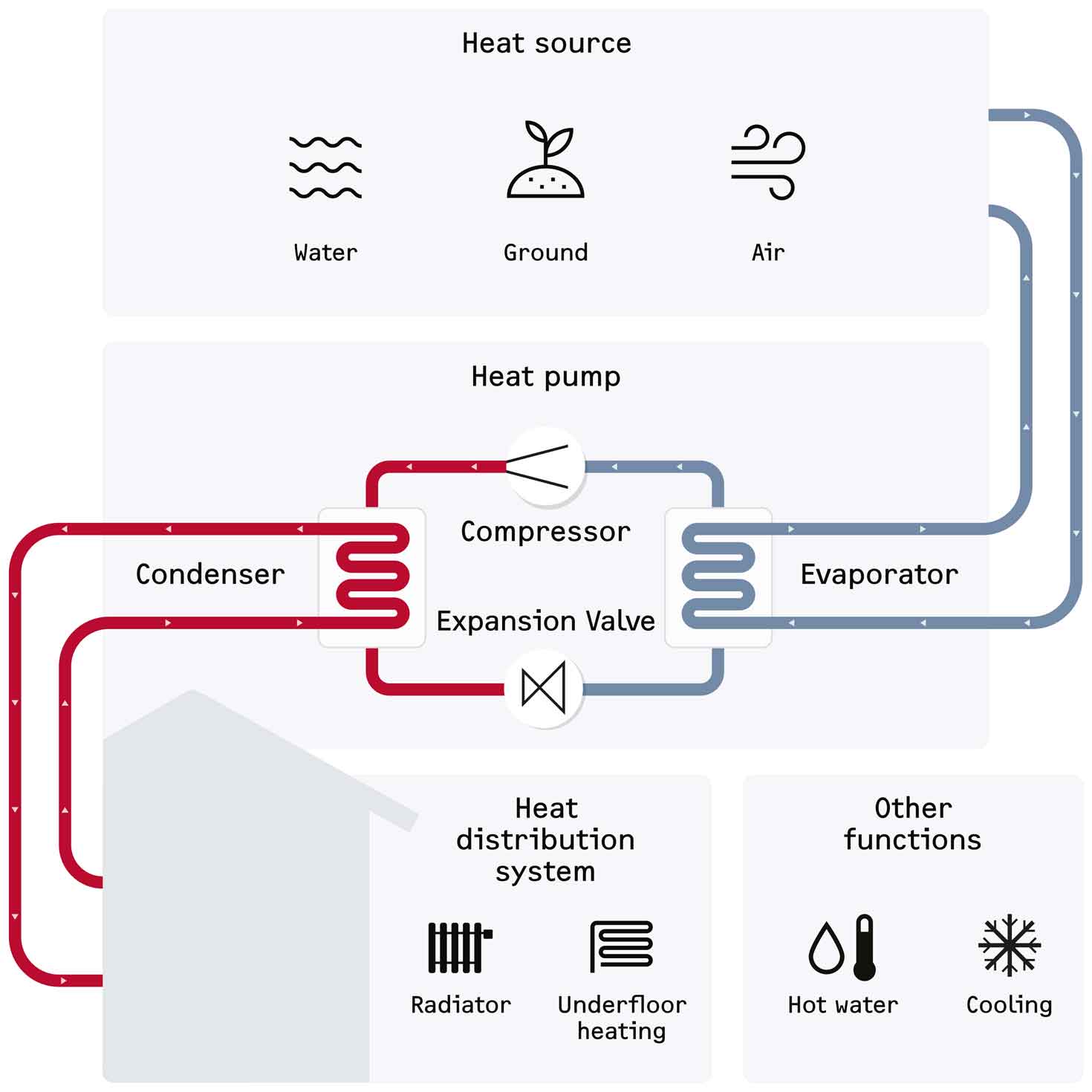
The operating principle of a heat pump is similar to that of a refrigerator - only in reverse. A refrigerant circulates within a closed loop and transfers heat from the environment into the building’s heating system. The process takes place in four steps: evaporation in the evaporator, compression in the compressor, condensation in the condenser, and expansion in the expansion valve.
- Evaporation: The heat pump extracts thermal energy from the environment (air, ground, or groundwater). This takes place in the evaporator, where the refrigerant changes its state from liquid to gas. Because the refrigerant has a low boiling point, it evaporates even at relatively low temperatures. It absorbs heat energy from the heat source and becomes gaseous.
- Compression: The compressor then comes into play. It compresses the gaseous refrigerant. As the pressure increases during compression, the temperature of the gas also rises. This raises the temperature to the level required for transferring heat to the heating system.
- Condensation: The now hot gas flows through a second heat exchanger, known as the condenser. There, it transfers its heat to the heating circuit and condenses back into a liquid.
- Expansion: The liquid refrigerant is still under high pressure. It passes through an expansion valve, where the pressure is reduced. The refrigerant is then ready to absorb energy from the environment again in the evaporator. The cycle can now start over.
To understand this principle, heat energy must be considered on a physical level. From a physics perspective, thermal energy exists whenever atoms and molecules are in motion. This movement only ceases at absolute zero, which is −273.15 °C (0 Kelvin).
A key factor is that the refrigerant is colder than the heat source (e.g., the outdoor air) and evaporates at very low temperatures. This allows the refrigerant to absorb thermal energy from the heat source even when temperatures are below freezing.
However, the following principle applies: the smaller the temperature difference between the heat source (e.g., the outdoor air) and the heating system (flow temperature), the more efficiently the heat pump operates. The smaller this temperature difference, the less the refrigerant needs to be compressed to reach the temperature required by the heating system. As a result, the compressor consumes less electricity.
Over the course of a year, the efficiency of a heat pump can vary depending on the heat source and the specific model. While outdoor temperatures in our climate fluctuate significantly throughout the year, ground temperatures remain relatively constant and above freezing below a certain depth.
What does a heat pump look like and where is it installed?
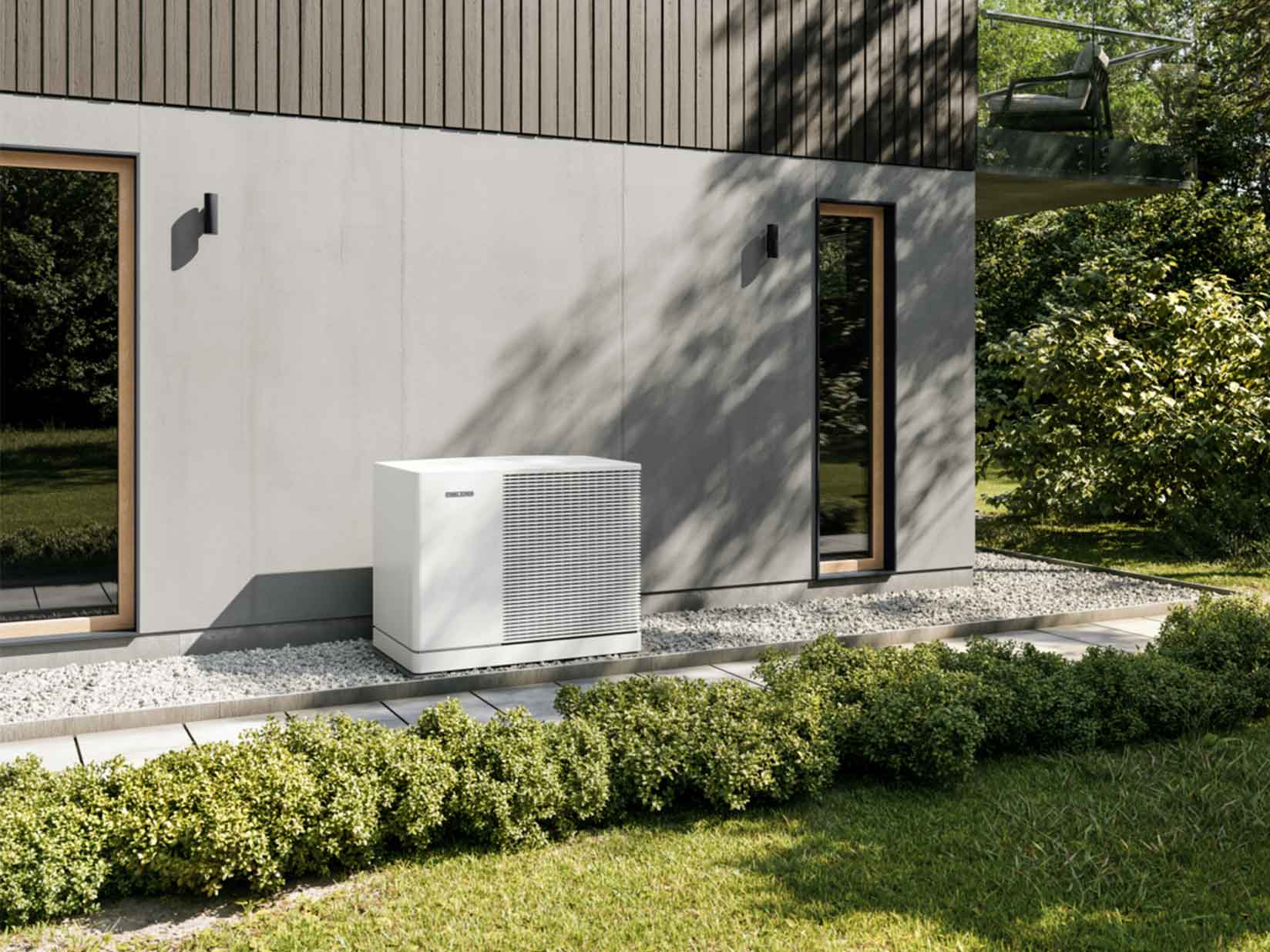
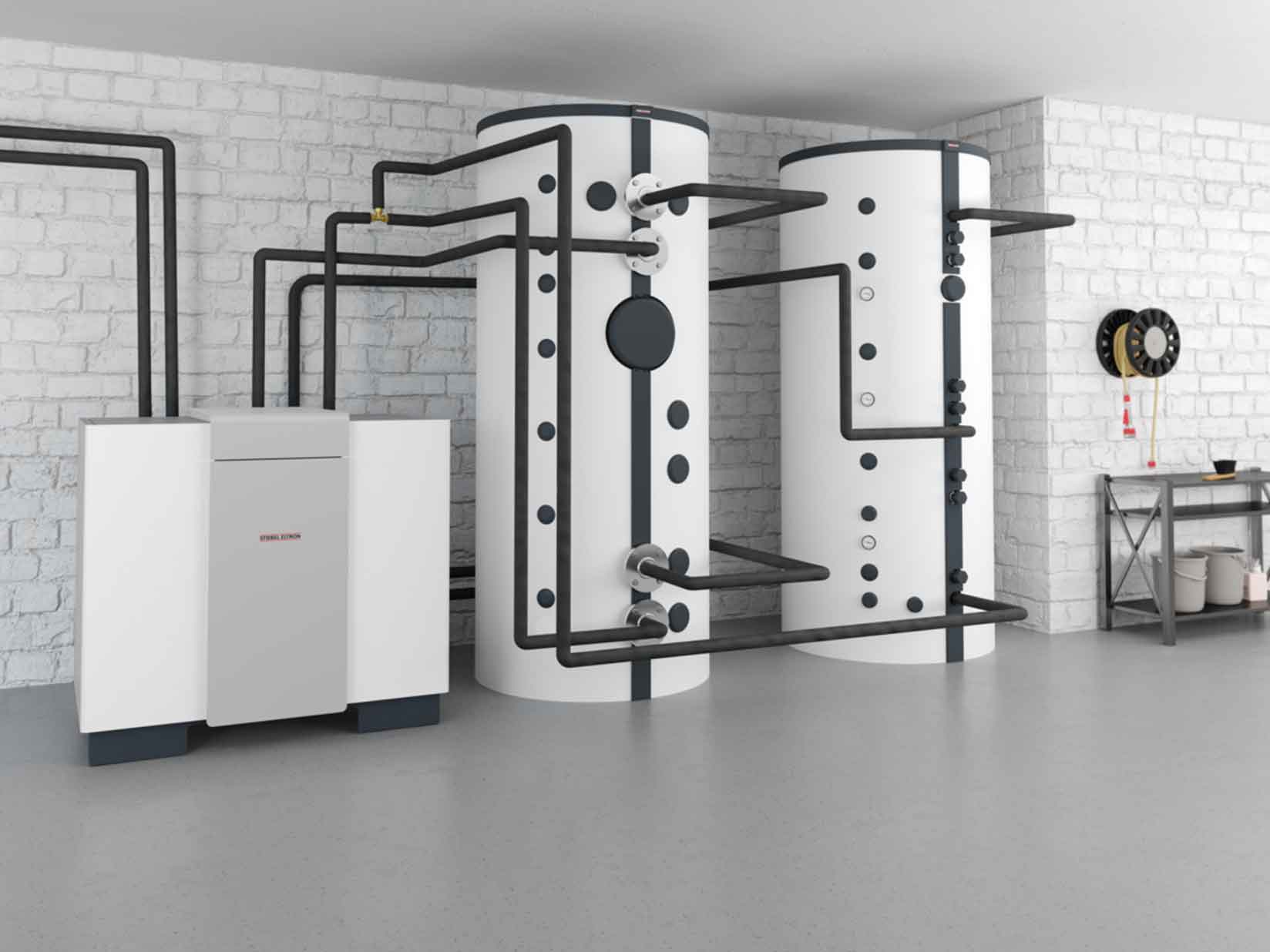
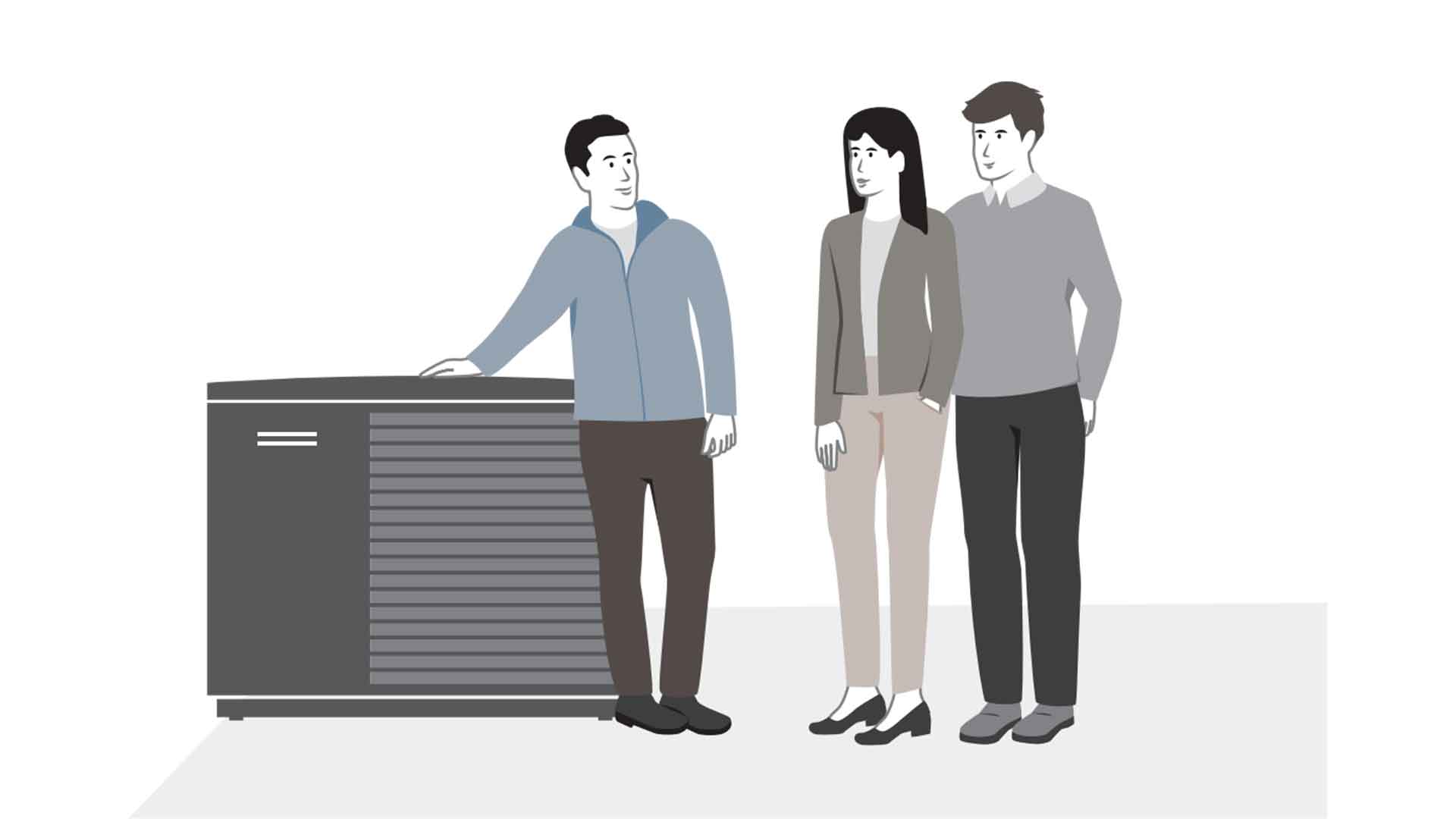
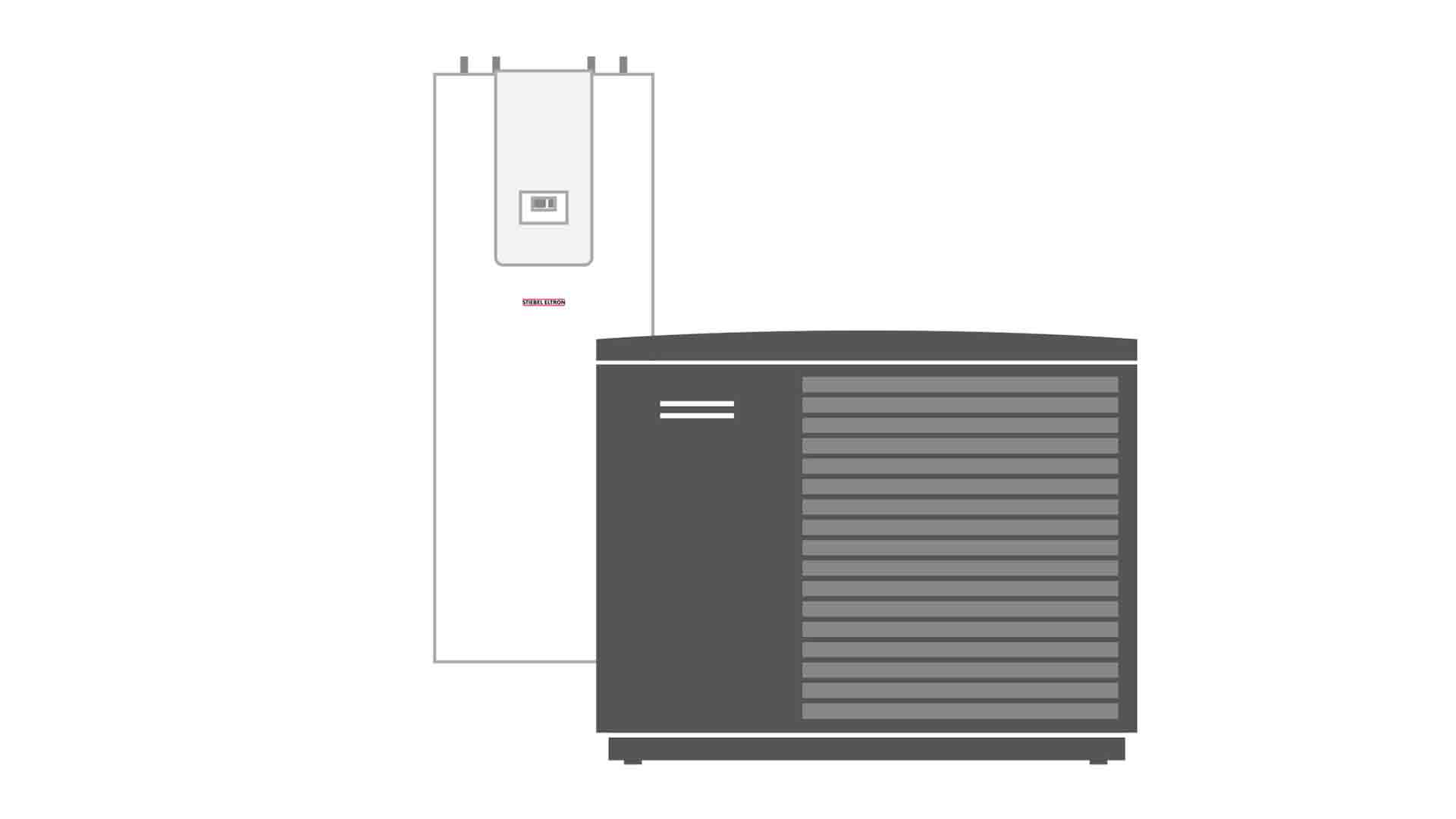
Although every heat pump consists of three fundamental components for energy absorption, energy conversion, and heat distribution, the design and technical implementation vary depending on the system type and model. A heat pump consists of several components: an outdoor unit and an indoor unit, or in some cases an indoor unit only. The outdoor unit of an air source heat pump is a compact, typically rectangular device, equipped with a fan. It can be installed in the garden, against an exterior wall, on an open area next to the building, or on a flat roof. The indoor unit resembles a modern boiler or a large refrigerator and is usually located in the basement, utility room, or technical room.
Depending on the type of heat pump, the installation location varies:
- Air-to-water heat pumps can be installed as a combination of an outdoor and indoor unit, or as an indoor-only system.
- Ground source heat pumps do not require a visible outdoor unit, as energy is extracted from the ground via borehole probes or horizontal ground collectors.





That's why you should choose a STIEBEL ELTRON heat pump
Our heat pumps stand for quality and durability
Our heat pumps stand for efficiency
Our heat pumps stand for flexibility

STIEBEL ELTRON certified partners provide expert advice and service

Our heat pumps are easy to use
What types of heat pumps are available?
Heat pumps differ according to the type of heat source they use. STIEBEL ELTRON offers efficient products and services for heating, cooling, ventilation, and domestic hot water production in a wide range of building types. You can choose whether your heat pump uses air, ground, or water as its energy source. This ensures the right solution for every building, installation situation, and comfort requirement. STIEBEL ELTRON heat pumps operate so quietly that even your neighbors will appreciate them. Many components are already integrated into our heat pumps and hot water storage tanks. This not only saves installation time but also reduces space requirements and helps create a tidy, organized plant room.
Depending on the heat source, heat pumps are classified into:
- Air source heat pumps (also known as air-water heat pumps)
- Ground source heat pumps (also known as brine-water heat pumps)
- Domestic hot water heat pumps (also known as hot water heat pumps)